Dialogue or Silence: What a Scene Needs
Dialogue or silence in a scene can steer attention and alter what readers infer. This revision routine helps you shape pauses, speech and the final rhythm.
Dialogue or silence in a scene directs the reader’s attention before the plot changes. Outside a solicitor’s office, “Lovely weather” might be courtesy, a diversion or a bid to keep someone nearby; the same words followed by a long pause carry a different weight. Revision is less about making every exchange clever than deciding what the reader should hear, watch or wait for.
A clear seven-day routine can help you make that decision without turning revision into a second draft of the whole story. The first five days each have a defined task. The final two are deliberately separate: one day away from the scene, followed by a return read and targeted edits.
Record the scene’s existing rhythm before changing it
On day one, read the scene aloud once without editing. Mark spoken lines, narrated pauses and moments when a character continues an ordinary task instead of responding. In the margin, record observable details rather than verdicts: “answers immediately”, “looks at the door”, or “changes the subject”. This gives you a map of the scene as written, not a list of presumed faults.
Notice where your voice speeds up or slows down. A run of short replies may quicken the exchange; a long speech may hold the floor; a pause may keep attention on an unfinished action. None of these effects is automatic. A silent beat can feel empty, and a long speech can carry pressure, depending on what surrounds it.
Use a pencil, a paper copy or comments in Google Docs. Leave labels such as “dramatic” for later; they describe an impression, not what produced it.
Give each spoken line a distinct job
On day two, examine what the dialogue contributes that the surrounding narration does not. A line might define a problem aloud, reveal a difference in how two people understand an event, or change the terms of their exchange. A mismatch between question and answer can be especially revealing, but only if the scene gives the reader enough context to notice it.
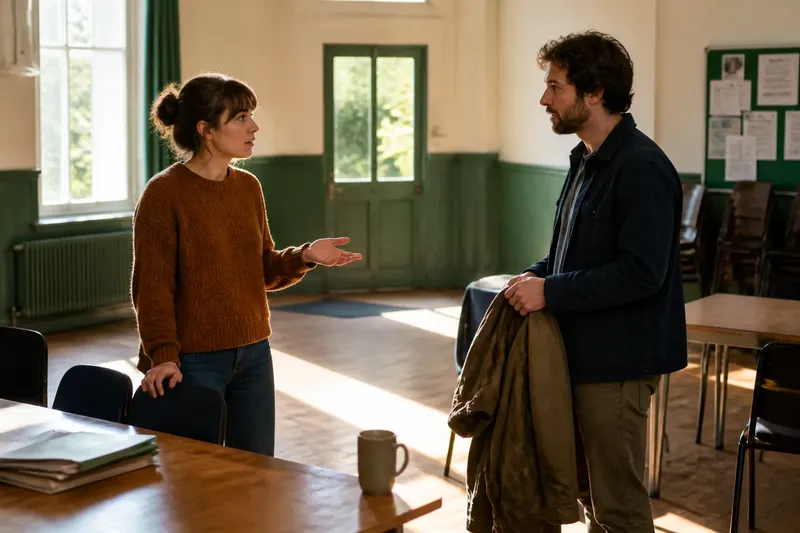
Imagine Mara and Ivo, in an invented scene, are closing a community hall after a meeting. Mara asks, “Did you lock the side door?” Ivo replies, “The caretaker has the key.” The answer shifts responsibility rather than confirming whether the door is locked. If their disagreement concerns who must secure the hall, that mismatch lets the reader hear Ivo’s tactic without a paragraph explaining it. If the door’s status matters to what happens next, Mara may need to ask again or check it; otherwise the exchange can remain unresolved.
When a line repeats information the narration has just supplied, ask whether the repetition changes the social situation. A repeated question can press someone; a repeated fact may sound like the author checking that the reader was listening. Keep the former when it earns its place. Reconsider the latter.
Shape silence around a specific point of attention
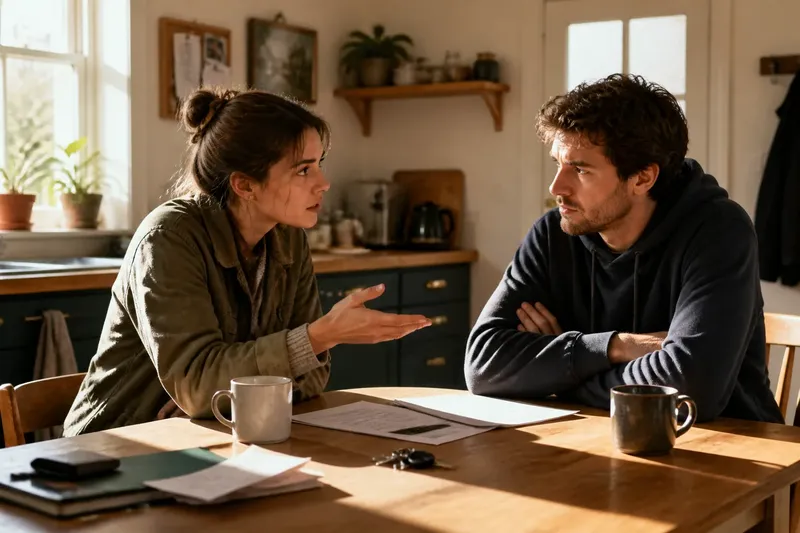
On day three, temporarily remove the dialogue from a short passage and see what the actions alone make the reader notice. A character might sort papers, wait for a kettle to click off or leave a coat untouched on a chair. The silence is not the absence of movement; it is the stretch in which the reader watches an action continue without the expected words.
Give the reader something definite to attend to: a hand hovering above a document, someone waiting for another person to look up, or a routine carried on while a question hangs unanswered. If a pause has no such focus, it may simply report elapsed time. Add an action, shorten the gap or restore a line that changes the exchange.
Silence can suggest thought, refusal, distraction or uncertainty, but it cannot by itself tell the reader which one is true. Let the surrounding action support the interpretation the scene needs. Keep several readings open when that uncertainty matters; clarify the basic sequence of events when it does not.
Compare versions by what they make the reader notice
On day four, revise one passage in two distinct ways. First, replace an explanatory speech with an observable action. Then try a spoken line where the original relies on a pause. Write a short note beside each version describing the effect: “The line names the refusal” or “The silence keeps the reason uncertain while the other person waits.”
Choose the version that changes the reader’s experience in a useful way, not the one that is merely shorter. Dialogue offers words, their order and their relation to what was asked. Silence offers a gap shaped by the action around it. If both versions produce the same effect, either the change is superficial or the original already does the necessary work.
Ask what the reader can safely infer
When should a character answer directly?
Use a direct answer when the reader needs the information at that moment or when the answer changes the exchange. If the character does not answer, make the omission legible through a reply, a following action or a clear consequence.
What gives a pause a purpose?
A pause holds attention when the reader has something specific to watch or wait for, such as a task continuing or a response not arriving. If attention has nowhere to settle, shorten the pause or give it an observable focus.
How much ambiguity can a scene carry?
Leave a motive uncertain when that uncertainty adds pressure or interest. If different readings would make the next event hard to understand, add a cue through action, dialogue or narration.
How can I tell if a line repeats too much?
Check whether the scene has already made the same information clear, then ask what the repeated line adds. Keep it if it presses, comforts or redirects someone; otherwise cut or reshape it and listen for what changes.
Use all seven days for a complete revision pass
On day five, read the scene once without stopping and note only the places where speech rushes past a moment or silence has no clear focus. On day six, leave the draft alone. On day seven, read it aloud again, make the targeted edits and check that each one changes what the reader hears, watches or infers. The rest day is part of the routine, not a mysterious interval in which revision is supposed to happen.
Say an invented scene contains a six-line exchange after one character asks whether the side door is locked. On day one, the writer marks that the reply comes immediately and a coat is picked up during the next pause. On day two, they decide the reply changes the subject but the later explanation repeats that evasion. On day three, they try removing the explanation and keep the coat action as the focus of the silence. On day four, they compare that version with one where the character says, “Ask the caretaker,” and choose the latter because the scene needs the reader to hear the deflection plainly. On day five, the read-through reveals that the next line already names the caretaker, so they cut the duplicate. After a day away, the day-seven read shows the exchange now ends on the deflection; the writer keeps it, accepting that the character’s reason remains unclear.
Dialogue or silence is a choice about where the reader’s attention rests. When you revise, decide whether the scene needs words to sharpen the exchange or a pause to make its unresolved part visible. That distinction is a more useful editing note than “make it more dramatic”, which is how a perfectly serviceable scene acquires a thunderstorm.